We don’t have a certificate.
We have a commitment.
Organic certification is a label. At Middle World Farms, we’d rather spend that money on the soil.
£0
synthetic pesticides or herbicides used on our land. Ever.
£3,000+
the annual Soil Association certification fee that wouldn’t change a single thing we do
100%
of our produce grown without synthetic inputs, pesticides or herbicides
The honest answer
We farm without synthetic pesticides, herbicides, or artificial fertilisers. We focus obsessively on soil health. We use biochar, compost, and companion planting. We know every bed, every variety, every season.
What we don’t do is pay a certification body £3,000 a year to tell you that.
Organic certification is a proxy for trust when you can’t see the farm. But our members can see the farm. They can walk the beds. They can ask us anything. They can watch how we handle a pest outbreak or an unexpected frost. That kind of transparency doesn’t come with an inspector’s stamp — it comes from a relationship.
We’re not against organic farming. We’re against the idea that a label is a substitute for knowing your farmer.
The 7 reasons people choose organic — and the reality
These are the things people are really trying to achieve when they buy organic. Here’s what the science actually says — and what we do instead.
1. No pesticides or chemicals
The belief: Organic means chemical-free.
The reality: Organic certification permits a range of naturally-derived pesticides — some of which are more toxic to ecosystems than low-dose synthetic alternatives. The label doesn’t mean zero inputs.
At MWF: We use zero synthetic pesticides or herbicides. Full stop. Not because a certificate says so — because we chose it.
2. Better for the environment
The belief: Organic farming is always the greener choice.
The reality: Lower yields per acre mean more land needed for the same output — which can increase habitat loss. Carbon footprint per kilogram of food is often higher, not lower, for certified organic.
At MWF: We actively sequester carbon through biochar and build soil biology year on year. We track what we put in and what we take out.
3. Better taste
The belief: Organic food tastes better.
The reality: Multiple blind taste tests find no consistent flavour advantage for organic produce. Taste is driven by variety, freshness, and soil health — not the certification status.
At MWF: We select varieties for flavour, not shelf life. Our members pick up their boxes within 24–48 hours of harvest.
4. Higher nutritional value
The belief: Organic food is more nutritious.
The reality: Studies find only marginal or inconsistent differences in nutrient levels. Freshness, variety, and soil mineral content matter far more — none of which are measured by certification.
At MWF: We test our soil regularly. Healthy soil biology is the foundation of nutrient-dense food — that’s where our focus goes.
5. Better animal welfare
The belief: Organic guarantees high animal welfare standards.
The reality: Organic sets a welfare floor, but many non-certified farms — including ours — go well beyond it. The certificate is a minimum standard, not a maximum.
At MWF: Animal welfare is built into how we farm, not into how we market ourselves. Come and see.
6. GMO-free
The belief: Organic means no GMOs.
The reality: Organic does prohibit GMOs — but so do most conventional farms. GMO avoidance is a separate decision from certification, and we’ve made it.
At MWF: We grow from non-GMO seed, including heritage varieties we’ve selected specifically for our Lincolnshire growing conditions.
7. Supporting local farmers
The belief: Buying organic supports small, local farmers.
The reality: Much supermarket organic produce travels thousands of miles and comes from large agribusinesses. The logo doesn’t tell you who grew it or where.
At MWF: You know exactly who grows your food. We’re in Washingborough, Lincolnshire and we’ve been here since the beginning.
“The organic label is a workaround for a broken food system — one where you can’t see your farmer, can’t ask questions, and have to trust a sticker instead of a person. We’d rather fix the relationship than buy the sticker.”
Middle World Farms
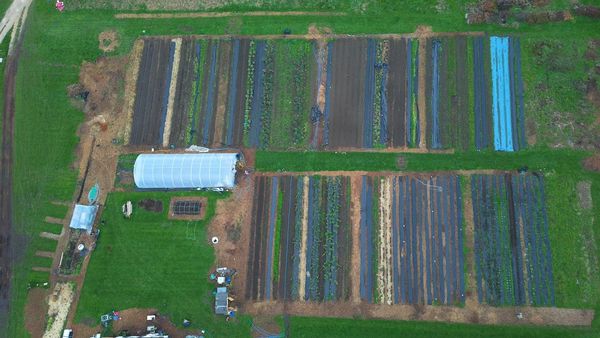
Our fields have never seen a drop of synthetic pesticide.
No inspector comes to verify that.
We just know it.
What we do instead
Not organic. Not conventional. Something more considered than either.
Zero synthetic inputs
No synthetic pesticides, herbicides, or artificial fertilisers. We manage pests through rotation, timing, companion planting, and physical controls — not chemistry.
Biochar & carbon farming
We produce and apply biochar — a carbon-rich soil amendment that sequesters carbon for hundreds of years, improves water retention, and feeds soil biology. This goes well beyond anything organic certification requires.
Composting & closed-loop nutrition
Farm waste, kitchen scraps from our members, and green material all go back into the soil. We try to keep as much of our nutrient cycle on-farm as possible rather than importing fertility.
Soil health as the measure of everything
We test our soil and track biology over time. The goal isn’t to pass an audit — it’s to leave this land in better shape than we found it. That’s the only measure that matters to us.
Companion planting & biodiversity
We grow flowers between and amongst our crops — not for aesthetics, but to attract beneficial insects, confuse pests, and build the ecosystem that keeps the farm in balance without sprays.
Radical transparency
Our members can visit any time. We hold open farm days, invite questions, and share what’s going well and what isn’t. You don’t need a certificate when the farm is an open book.
Come and see for yourself
We hold regular open farm days throughout the growing season. Walk the beds. Ask how we handle aphids, slugs, or a blight outbreak. Ask what we put on the soil and why. Ask what’s not going well.
Every CSA member gets full access to the farm — not just the polished version, but the real thing. Because trust isn’t built by a sticker. It’s built by knowing.
If what you’re really looking for when you buy organic is food you can trust, grown by people who genuinely care — we think we’ve got something better to offer.
Still not sure?
Try a veg box. See the quality, smell the difference, taste what’s possible when food doesn’t travel.
Our satisfaction guarantee means if you’re not happy with your first box, we’ll refund you in full. No awkward conversations, no conditions.