
Biochar
Ancient technology. Modern climate solution.
We believe biochar could help change the future of our planet. Here’s why we’ve committed to it — and what we’re building.
3×
more carbon stored in soil than exists in the entire atmosphere
1,000s
of years biochar carbon stays locked in soil — not returning to the atmosphere
Net−
our goal — carbon negative, not just neutral. Removing more CO₂ than we produce
What is Biochar?
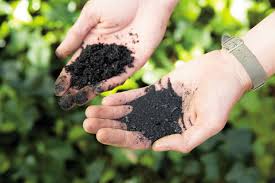
Biochar is a charcoal-like substance made by burning organic waste — wood chips, crop residues, dead plants — in a low-oxygen process called pyrolysis. Unlike throwing that material onto a bonfire, pyrolysis converts it into a stable, highly porous form of carbon that can persist in soil for thousands of years.
Regular charcoal burns and releases its carbon back into the air. Biochar doesn’t. The carbon is locked into a crystalline structure that soil microbes can’t easily break down — so instead of cycling back into the atmosphere in months or years, it stays buried for millennia. That’s the climate superpower.
The process also generates heat — energy that can be captured and put to use. Heating greenhouses. Generating electricity. A power source that actively sequesters carbon as it runs.
Why It Matters
Biochar doesn’t do one thing — it does several simultaneously, each compounding the others.
🌍 Climate
Converts atmospheric carbon captured by plants into a form that can’t re-enter the atmosphere for centuries. One of the few genuinely carbon-negative activities available to farmers.
🌱 Soil
The porous structure holds water and nutrients more effectively. Helps soils that have been depleted by conventional agriculture recover their fertility naturally — without synthetic inputs.
♻️ Waste
Agricultural and forestry waste would otherwise rot or burn uncontrolled, releasing its carbon. Pyrolysis intercepts that and turns it into something permanently useful.
⚡ Energy
The pyrolysis reaction generates substantial heat. Captured and used to heat greenhouses or generate electricity — energy production that pulls carbon down rather than up.
The Carbon Cycle — and How Biochar Breaks It
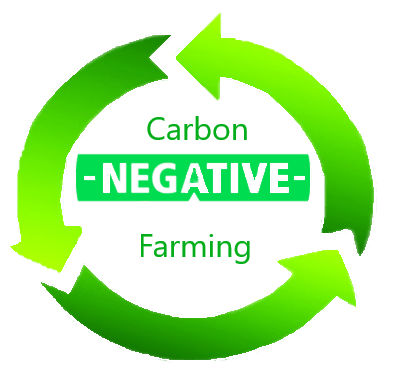
Soils already hold three times more carbon than the entire atmosphere. Plants pull CO₂ from the air during photosynthesis. When they die and decompose, most of that carbon is released back by soil microbes — a cycle that’s roughly balanced in nature, but that industrial agriculture has tilted badly in the wrong direction.
Biochar breaks the cycle. By converting plant material into pyrogenic carbon — a form that resists microbial decomposition — it removes carbon from the cycle essentially permanently. The International Biochar Initiative defines it as carbon that “can persist in the soil for thousands of years.”
This isn’t offsetting. It’s actual removal — and it improves the soil it’s buried in at the same time.
UK Government: Biochar Evidence Review (PDF) → Wikipedia: Biochar →
Our Vision for Middle World Farms
“Imagine a power station that sequesters carbon while producing power. That is what we are building.”
— The Middle World Farms Team
What we’re doing
We are committed to producing biochar ourselves, here on the farm, to sequester more carbon than we produce. Our goal is to become not just carbon neutral — but carbon negative. The energy generated will extend our growing seasons by heating our greenhouses, with potential to generate electricity.
Our production process produces no smoke. The feedstock comes from sources that would otherwise go to waste: agricultural residues, local tree surgeons, joinery workshops, food waste. We will never cut down trees for this — only materials already destined for the atmosphere.
Where we source material
- 🌾 Agricultural waste from our own production and neighbouring farms
- 🌳 Offcuts and trimmings from local tree surgeons
- 🪵 Waste wood from joinery and construction workshops
- 🍂 Leaf litter and dead plant material from the farm
- 🥦 Food processing waste that would otherwise decompose and release CO₂
This is a long project. We haven’t promised a date — we’ve promised a direction. Every vegbox you buy funds the journey.
See It In Action — Farm Scale Biochar
This outstanding 8-part series by Living Web Farms, featuring Bob Wells & Jon Nilsson, covers everything from feedstocks and kiln design through to energy use and real-world farm operation. It shaped our own thinking. We share it here with huge gratitude to the team at Living Web Farms.
Videos by Living Web Farms — shared here with full credit and gratitude. All content remains the property of Living Web Farms.
This is a massive project — and we need your support
With your continued support as customers, we can keep investing in the infrastructure to make this real. A veg box isn’t just food — it’s a stake in something that could genuinely matter for the next generation.